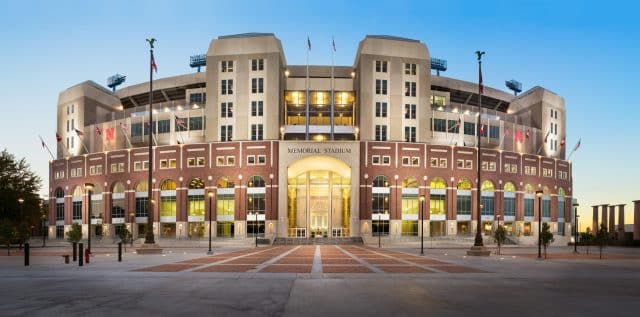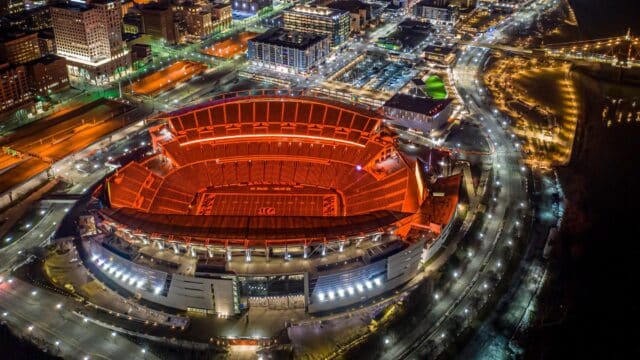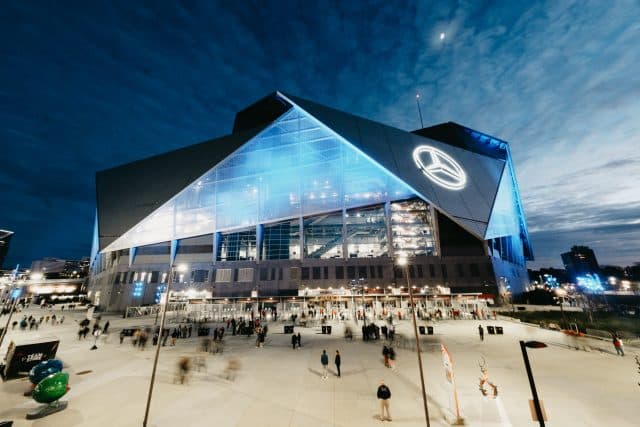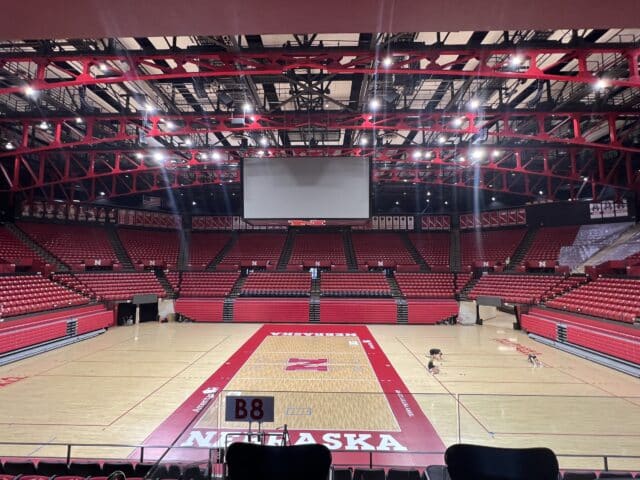
With the design phase behind them, MSB Consulting Engineers stood on the starting blocks to redefine the University of Nebraska-Lincoln’s (UNL) digital landscape. The sprint spanned eight elite Husker Athletics venues, including the 85,000-seat Memorial Stadium, 13,595-capacity Bob Devaney Sports Center, the 9,000-seat Haymarket Park, and thousands of seats across the university’s other athletic facilities. By incorporating a continuous, high-performance Wi-Fi network, MSB answered Nebraska’s call to keep fans, faculty, and staff connected at every sporting event across the campus.
An exercise in precision, Phase II would bring to life the finished design of a 100GB fiber-linked Wi-Fi network and core, with the end-goal of elevating the digital experience for Husker fans and ensuring Nebraska’s vision of becoming a high-speed, future-ready digital powerhouse.
Exceptional Times, Exceptional Measures
A project with roughly 1,500 access points and miles of CAT6A cabling calls for a lot more than “Standard Procedure.” So, MSB approached Phase II as engineering and integration experts, applying measured, nuanced solutions instead of simply merging components into an ecosystem.
The foundation of such a world-class build was laid well before the first cable was installed. Early in the process, MSB developed meticulous design documents that were client-approved down to the letter. This forethought paid off, resulting in virtually no design-related alterations and zero change orders during construction.
Surgical Integration
To preserve consistency across eight unique buildings, MSB implemented a “measure twice, cut once” philosophy. The team developed detailed installation plans for every piece of equipment and reviewed them meticulously with the contractor. In high-risk areas, such as the soaring catwalks at the Devaney Center, every access panel was measured to a quarter-inch. The measurements were compared against the drawing package to ensure that the angles and placement matched the exact engineering goal.
MSB employed stringent testing, compliance with standards, and continuous peer reviews to safeguard quality and exceed expectations. The team placed progress trackers on A&E plans, enabling real-time quality monitoring of campus-wide devices. This process allowed MSB to quickly detect and correct any errors, protecting the integrity of the “Husker-standard” build.
While Phase I established the Wi-Fi core, Phase II introduced a “converged” network infrastructure that included Husker Vision, the university’s multimedia and video production component. To maintain security, MSB ensured that broadcast and wireless traffic remained separate, sharing only critical core components such as the firewall, DNS, DHCP, and RADIUS. The team designed a dual Cisco Nexus 9000 core and HPE edge switches, providing ample capacity to support thousands of simultaneous streams. If the network could accommodate complex 4K broadcasts, it would easily handle stadium crowds streaming highlights and sharing them online.
Engineering Failure Out of The Equation
To create a solid network tough enough to handle tens of thousands of concurrent users, MSB limited user density to 50-200 users per access point. The result was a top-quality experience even during peak conditions. The team also conducted painstaking “failover” tests on every network component. These tests verified the redundancy was rock-solid, achieving a reliability rating of what team members proudly recall as “five nines” (99.999%).
Foundation For New Husker Traditions
On a 21st-century campus, the introduction of a new 6GHz camera or external wireless devices can introduce “noise” that interferes with the fan experience. MSB extended its “Day Two” stay to manage such unknowns. Through annual RF health checks, the team identified spectrum variances that could affect performance over time. This preemptive maintenance guaranteed that the university’s investment delivered industry-leading speeds year after year.
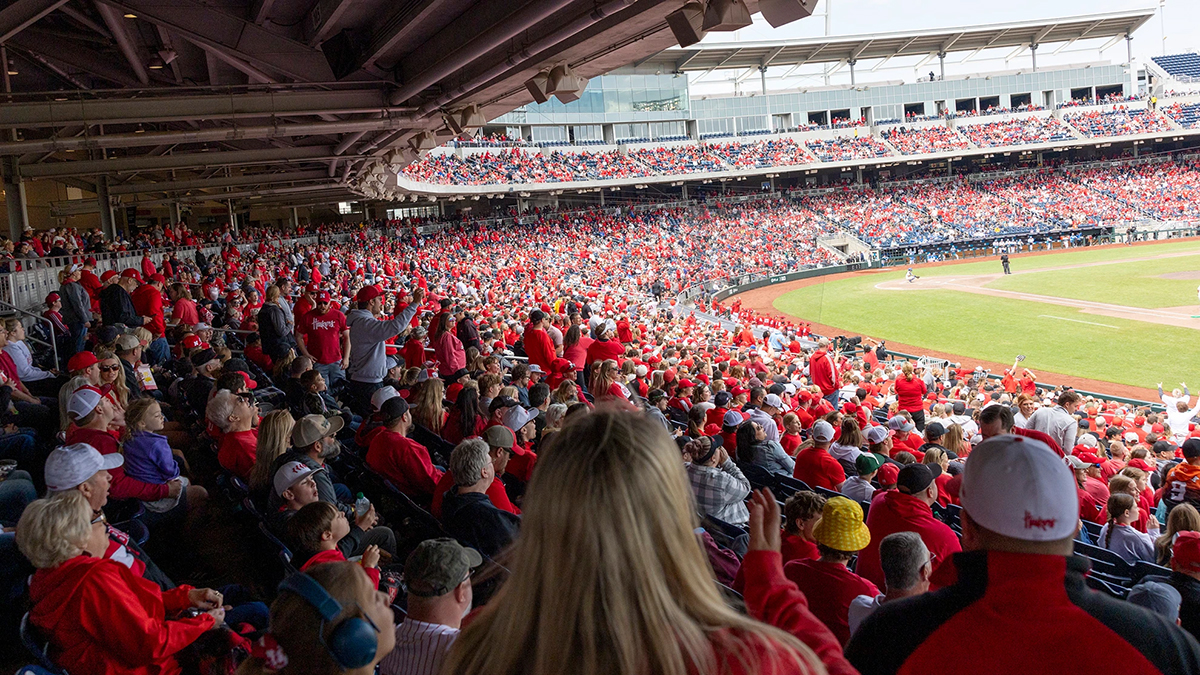
The real value of this strenuous upkeep becomes evident during key moments in UNL sporting events. When that match-winning spike at the Devaney Center sends 8,000-plus fans to their phones, the infrastructure is ready. During sold-out Huskers home games at Memorial Stadium, 711 access points (APs) ensure reliable operations, concessions, and entry. Built to handle major surges, the MSB-designed network ensures that heavy data tasks (from social media uploads to real-time stat tracking) run instantly, even under the pressure of a capacity crowd. With this robust, high-density network, UNL gained more than fast Wi-Fi; they secured a foundation for revenue, efficiency, and a world-class fan experience to lead the next decade of Husker traditions.